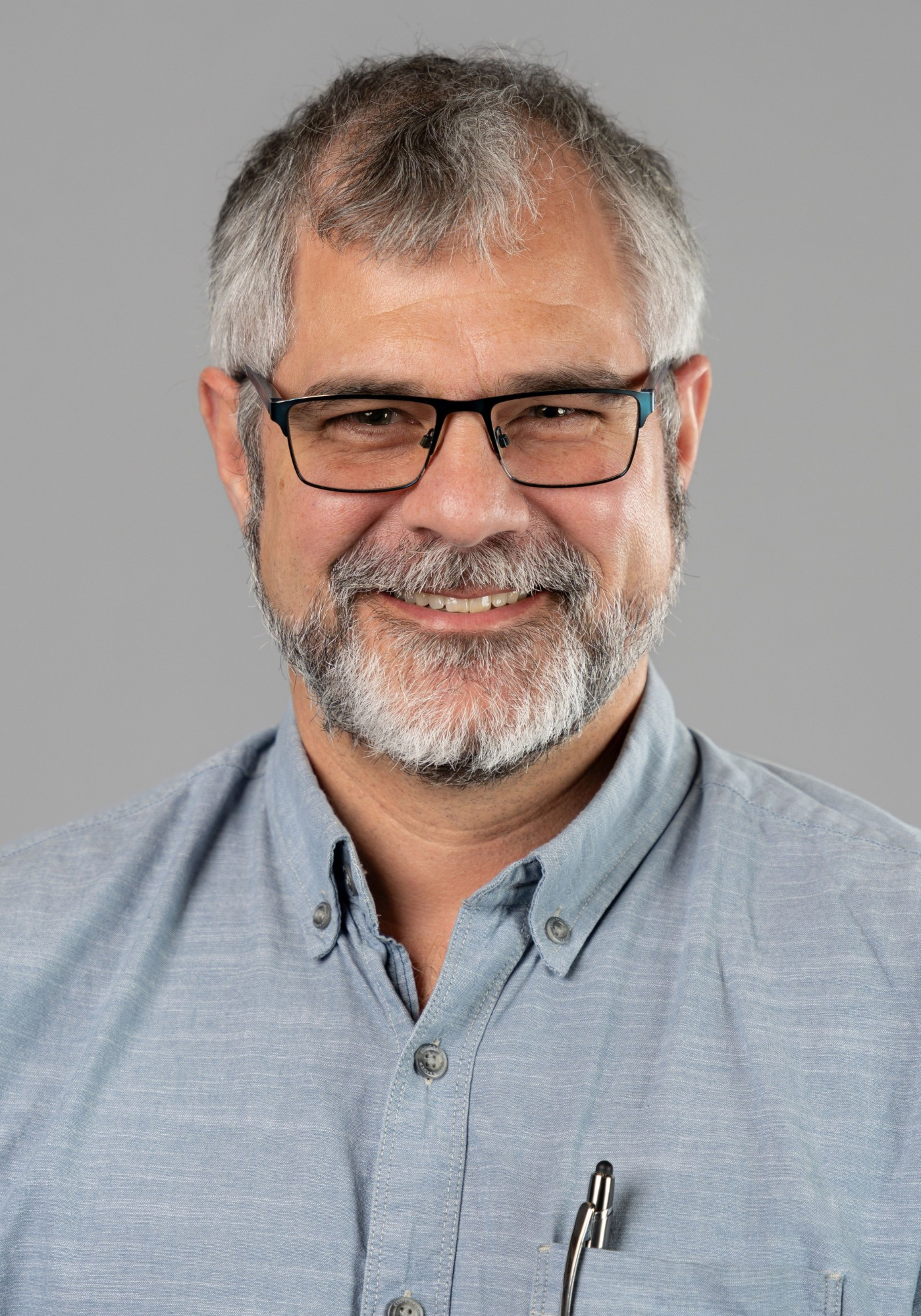
Glyn Williams-Jones
Burnaby, British Columbia
Position: Professor
Organization: Department of Earth Sciences, Simon Fraser University
Glyn is a Canadian physical volcanologist whose multidisciplinary research involves geochemical and geophysical modelling in conjunction with terrestrial and satellite remote sensing to investigate the processes responsible for triggering volcanic eruptions as well as associated geohazards. His research involves the investigation, through active monitoring and retrospective studies, of shallow magmatic plumbing and hydrothermal systems in extreme field areas around the world.
Areas of Expertise:
Language(s):
My Work
What I do:
I study how volcanoes work — from the magma reservoirs and gas pathways deep underground to the surface signals that indicate an eruption may be imminent. My research integrates geochemistry, geophysics, and remote sensing into a “4D” toolkit that aims to reconstructs a volcano’s plumbing system and track how it changes over time, at sites ranging from Mt. Meager and Tseax in British Columbia to Taal in the Philippines and Sierra Negra in the Galápagos. I’m driven by a simple mission: turn fundamental volcanology into something that protects people. That means working directly with Natural Resources Canada on national hazard monitoring, co-developing hazard assessments with Indigenous communities whose territories include Canada’s volcanoes, and training the next generation of hazard scientists to carry this work forward. Increasingly, I’m also asking how the same subsurface processes that create hazards (e.g., geothermal heat and fluids) can be understood as resources, not just risks. At its core, my work is about making the invisible parts of a volcano legible enough to act on before, not after, an eruption.
Ask me about:
Ask me about volcanic hazards in Canada as we have more active and potentially active volcanoes than most Canadians realise, several near communities, infrastructure, and air travel corridors. I can speak to how we reconstruct eruption histories and recurrence intervals for young, poorly studied / unmonitored volcanoes (one of my current focuses is Mt. Meager in southwest BC); how satellite radar (InSAR), geophysics, and gas geochemistry combine to detect unrest before it’s visible at the surface; glaciovolcanic hazards, where ice and magma interact to produce unusually destructive eruptions and landslides; and geothermal and critical-mineral potential at volcanic systems. I’m also a resource on Indigenous-led hazard research helping to co-develop monitoring and risk assessments with Nations whose territory includes active volcanoes, guided by their knowledge, protocols, and consent. I’m also happy to talk about the practical side of forecasting volcanoes and other geohazards such as what a monitoring network actually needs to give emergency managers useful, timely information, and why Canada still lacks the observatory infrastructure most volcanically active countries take for granted.
Why me:
I’ve spent over twenty years building one of the only integrated geochemistry-geophysics-remote sensing research programs focused on Canadian volcanic hazards, at a time when the country still lacks a dedicated volcano observatory. My work bridges academia, government, and Indigenous communities: I advise Natural Resources Canada on hazard monitoring and have spent a decade building trust-based, consent-driven research partnerships with Nisga’a and Lil’wat communities. I serve as Associate Editor of the Journal of Volcanology and Geothermal Research and have held senior leadership roles in my department and as Canadian representative to IAVCEI and IUGG, the two main international bodies for volcanology and geophysics. My publication record (3,100+ citations, h-index 34) reflects sustained output but what I’m proudest of is my training record of over 40 graduate students and postdocs, many now at NRCan, USGS, GNS Science (New Zealand), and universities across three continents.
Fun facts:
I’m an identical twin and my brother is also a Professor, but in bioethics at Université de Montreal. I also have a hobby of genealogy.
About Me
Sector: Academia (Post Secondary)
English proficiency: Read, Write, Speak
French proficiency: Read, Write, Speak
Other Language(s): Spanish
Willing to Mentor: Yes
Available for Trainees: Yes
Title: Professor
Pronouns: He/Him/His
Gender: Male
Demographic: European / White
Awards: Fellow, Royal Canadian Geographical Society